Business IT security is more critical now than ever before but as a business owner what exactly can you do to protect your business?  It seems that no matter how much you spend there is an endless list of new threats that need more time and money spent on them, so why bother.

Cyber security is much like traditional security, there is no end to the amount you could spend to improve the security of your business.  For example your premises security might comprise of:  floodlights, alarms, police response, security cameras, shutters, fencing, security guards.  However, we all know that a determined criminal could break in if they wanted to.  Your aim is therefore to do enough to deter the vast majority of criminals. Once they realise the effort required, most will move on to easier targets.

Over the next few articles we will look at some of the basic steps you can take to protect your business from cyber attacks.  Let’s start of with an easy one which is called 2FA or MFA.

What is 2FA or MFA?

2FA, two-factor authentication and MFA or multi-factor authentication are often used interchangeably. They mean fairly much the same thing in the world of IT security.

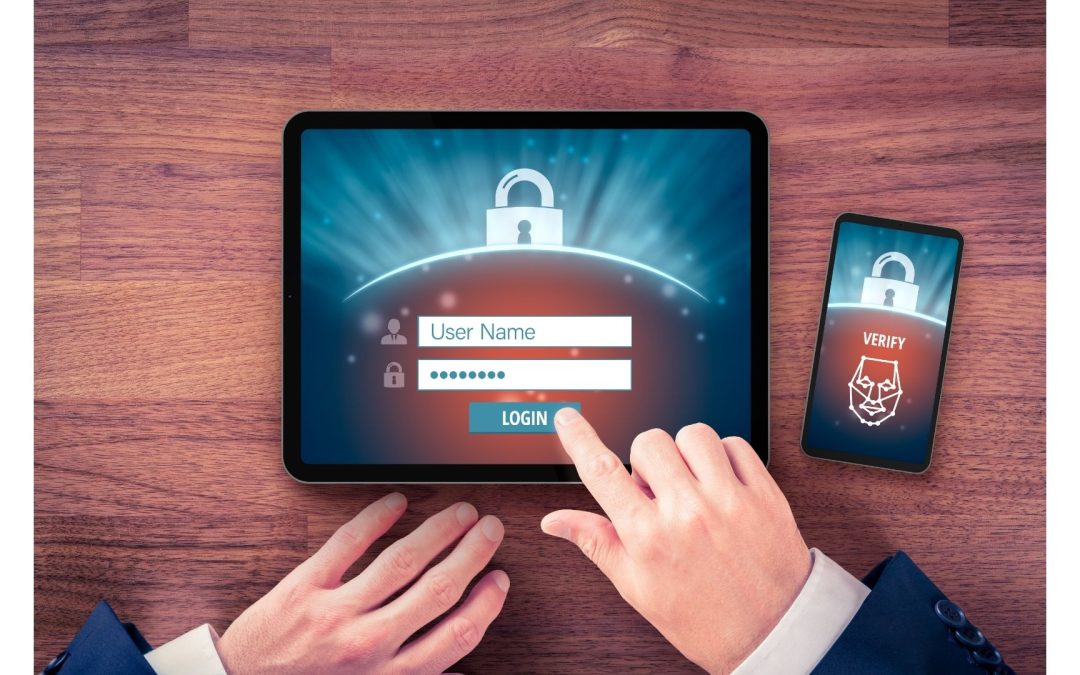
When you log into a website, program or application you normally need a username and password. What is becoming more common is the need to input another piece of information such as a code.  For example, it might be a SMS text sent to your mobile phone.  This code is essentially the 2nd factor that is required to authenticate who you are, hence the name “2FA”.

Essentially you might describe it as:

  • Something you know, like a PIN number
  • Something you have, like a smartphone or secure USB key
  • Something you are, like a fingerprint or facial recognition

Why use 2FA as part of your business IT security?

Having to enter 2 or more bits of information increases the IT security level manyfold. Think of it like chip and pin for your credit card.  If you lose your credit card then a criminal has the potential to go to shops and use contactless payment but at some point they will be requested to enter the 4 digit pin.  Without this secondary piece of information, the card is now useless and will not work again.

2FA is designed so that even if your password is compromised then your account is still safe.  Without the second piece of information the chance of an account breach is close to zero.

Surely passwords are safe?

Passwords are normally quite safe but they do have some weaknesses that make them more vulnerable than we imagine.  Some of the more common issues:

  • People sharing passwords
  • Writing down or storing passwords (without a password manager)
  • Using simple passwords
  • Reusing the same password on multiple sites
  • Using personally identifyable information such as childrens names or birthdates.
  • Websites being hacked making user credentials available

How is 2FA different to a password?

2FA often utilises a piece of information, such as a code, that is only valid for a short period of time – 30 seconds to 5 minutes are quite common.

Now in order to access your account a criminal would need to guess your username, password and this second code that changes each time you try to log in.

As you can see this is highly unlikely and is the reason that 2FA is a simple addition to your business IT security toolbox.

How 2 factor authentication works

Using 2FA

Given that most people carry a smartphone, they lock it and it rarely leaves their side then this is a great way to use 2FA.  There are many apps available to download but the most common are Microsoft Authenticator and Google Authenticator.

Once downloaded then 2FA needs to be turned on within the account settings of the website and it will normally give a QR code for the app to scan.

Once complete the app generates a random code that is valid for 30 seconds and without it there is no way to access the account.

Where to use 2FA

Many places such as banks have enabled 2FA already and it is not possible to utilise their services without this second code.  Banks tend to use SMS text or their own card readers but it is essentially the same thing.

My suggestions for 2FA are:

  • Microsoft Office 365
  • Email scanning accounts
  • Critical business applications holding sensitive information (CRM for example)
  • VPN connections to servers
  • Anywhere a compromised account could be catastrophic

Do you need help?

Have you got to this point and thought – “Yep, I need to do something now but I haven’t got time”.  Maybe you want to implement this yourself but need to check a few things first. Either way we are happy to help.

As a managed IT service company we spend our time helping businesses to get what they need from their IT systems and we would be happy to help you too.  Click the button below and  get a free 15 minute consultation to discuss your business IT and what you need help with.

Our guarantee:

  • There are no hidden charges – this is a 100% free 15 minute consultation with no hidden charges.
  • We will never spam you or sell on your contact details.
  • We will treat your information with absolute confidentiality.


Why do so many AI projects go nowhere? (A risk-first approach for regulated firms)

Many AI projects stall in regulated firms because the goal is unclear and the risk feels ownerless. Here’s a practical, governance-led way to adopt AI safely, prove value, and keep humans accountable for every decision.

Stop Replacing PCs Early: Build a “Device Health” Routine Instead

A PC usually doesn’t “get old” overnight — it gets burdened. The good news? A few small Windows 11 habits (and one simple monthly routine) can keep business devices running faster for longer and delay expensive replacements.

Beware the Next Generation of Phishing Attacks

Phishing scams are no longer crude or easy to spot. New, smarter attacks are changing the rules — and businesses need to rethink how they stay protected.

Your Browser Knows More Than You Think

Your browser doesn’t just see the websites you visit. It sees patterns, habits, and clues about your business. Most people never check what’s being shared behind the scenes. That’s a risk worth paying attention to.

Is Anyone Controlling AI at Work?

Do you really know how your team is using AI at work?
Uncontrolled AI use is creating serious data and security risks for businesses — often without anyone realising until it’s too late.

Old Passwords Are Still Unlocking Systems

Old passwords your team hasn’t used in years could still unlock your systems — and attackers know it. A recent cyber incident revealed how forgotten credentials put professional service firms at serious risk, and why enforcing MFA has never been more important.

Protecting Your Business from Today’s Smarter Digital Fraud

Digital fraud is evolving at a rapid pace, and modern scams are becoming harder to spot than ever. In this article, we explore practical, everyday habits your team can adopt to stay safer online — and how a few simple tools can make a big difference.

Preparing for Cyber Threats

Gone are the days of the obvious, noisy cyber attack. Today’s threats are stealthy, smart, and can slip by unnoticed until it’s too late. And if you think hackers are still relying on the same old tricks, a far more dangerous reality might already be lurking in the shadows…

Is Technical Debt Slowing Your Business

Is technical debt slowing your business down?
With Windows 10 now end of life, many UK businesses are uncovering hidden IT risks caused by outdated systems and delayed upgrades. Technical debt can lead to slower performance, increased downtime, and greater security exposure — especially for professional and regulated firms. Learn how a phased, low‑disruption approach to modernising your IT can improve reliability, strengthen security, and prepare your business for future technologies like AI.

Using AI Browsers at Work? You Need to Know This.

AI‑powered browsers can boost productivity, but they also introduce new security and data risks. Learn what businesses need to consider before adopting them.

Old Passwords Are Still Unlocking Systems

Old passwords your team hasn’t used in years could still unlock your systems — and attackers know it. A recent cyber incident revealed how forgotten credentials put professional service firms at serious risk, and why enforcing MFA has never been more important.

Man In The Middle – Behind the Hack [Video Guide]

Cybersecurity (cyber security) is a buzzword that seems to have appeared relatively quickly in the world of business IT.  If you search the term “cybersecurity” or “cyber security” on the BBC News website, there are currently 29 pages of articles from the last 2...

Using AI Browsers at Work? You Need to Know This.

AI‑powered browsers can boost productivity, but they also introduce new security and data risks. Learn what businesses need to consider before adopting them.

Can your business cope with winter disruption?

Thanks to the unseasonably mild weather we’ve enjoyed this autumn, it’s easy to forget that winter, and all the potential havoc it can wreak, is soon to follow. It’s hard not to feel that our weather has become more unpredictable and freak storms just aren’t, well,...

Eternal Blue – Behind the Hack [Video Guide]

What would you do if a hacker had access to all of your sensitive documents and data through a machine that they had exploited, with access to control your webcam as well as monitor the screen and keyboard? It’s not something out of action movie, what we’re describing...

Have you made these IT upgrades?

Technology is constantly changing and adapting; as such, it is important to always stay on top of upgrades to ensure you are running at optimum efficiency. At Absolutely PC, IT upgrades are a necessary and consistent part of our monthly and annual maintenance...

4000 small businesses a day: the vicious spread of WannaCry

In May this year the online world witnessed the Wannacry ransomware attack, a cryptoworm which spread like wildfire, demanding payments in the cryptocurrency Bitcoin in over 230,000 computers using the Windows operating system. The National Health Service, the UK's...

Protecting Your Business from Today’s Smarter Digital Fraud

Digital fraud is evolving at a rapid pace, and modern scams are becoming harder to spot than ever. In this article, we explore practical, everyday habits your team can adopt to stay safer online — and how a few simple tools can make a big difference.

Beware the Next Generation of Phishing Attacks

Phishing scams are no longer crude or easy to spot. New, smarter attacks are changing the rules — and businesses need to rethink how they stay protected.

New Dark Web Monitoring Tool Available from Absolutely PC

How much of your business and personal data is available online? The results could surprise you. With small business in the UK alone targeted by up to 65,000 attempted cyber attacks per day, data breaches and leaks are becoming an increasingly common occurrence. Once...