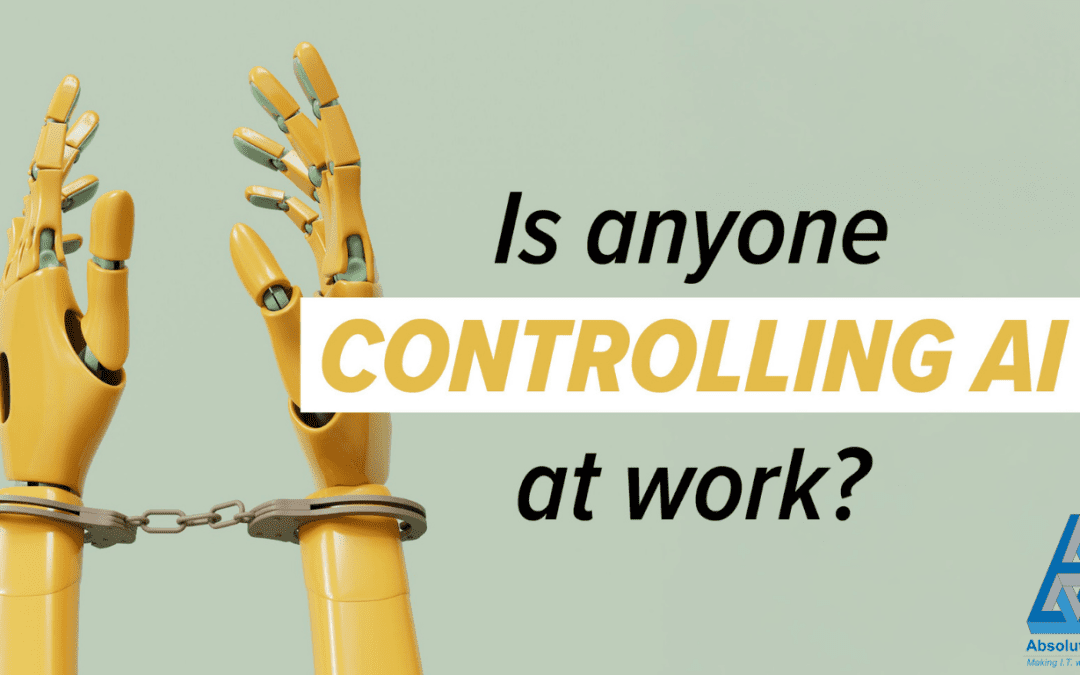
Here’s an uncomfortable question for business owners: Do you really know how your team is using AI at work?
Not how you think they’re using it — but what’s actually happening day to day.
For most businesses, the honest answer is no. And that’s where the risk quietly creeps in.
AI has arrived faster than the rules
AI tools like ChatGPT, Copilot, and Gemini have become part of everyday work life almost overnight. They’re brilliant for productivity — drafting emails, summarising documents, brainstorming ideas, and solving problems faster than ever.
The problem isn’t AI itself.
The problem is that it arrived far quicker than policies, controls, and governance did.
Shadow AI is the real issue
Many employees are using AI tools through personal accounts or unsanctioned apps. This is often called shadow AI.
It means business information is being pasted into systems you don’t control, can’t see, and can’t audit.
Most of the time this isn’t malicious. It’s well‑meaning staff trying to do their job better and faster. But the risk is very real.
What data is going into those prompts?
When someone pastes text into an AI tool, they’re not just asking a question — they’re sharing data.
That data can include:
- Customer information
- Internal documents
- Pricing or financial details
- Intellectual property
- Occasionally even login information
Once it’s in a personal AI account, it’s outside your security controls.
Why this becomes a security and compliance risk
Uncontrolled AI use creates a new kind of insider risk. Not bad actors — just everyday employees unknowingly exposing sensitive information.
If your business operates under GDPR, industry regulations, or client security requirements, unmanaged AI use can quietly put you in breach without any warning signs.
And attackers are paying attention. AI is now being used by cybercriminals to analyse leaked data and craft more convincing attacks.
The answer isn’t banning AI
Let’s be clear — banning AI doesn’t work. That ship has sailed.
But pretending AI is harmless isn’t the answer either.
The real solution is AI governance, a very specific example of which I wrote about a few weeks ago when discussing who is approving AI purchases
What AI governance actually means
Good AI governance isn’t about fear or restrictions. It’s about clarity.
That includes:
- Deciding which AI tools are approved for work use
- Being clear about what data can and cannot be shared
- Putting visibility and controls in place
- Educating your team in a practical, non‑technical way
AI is already part of how work gets done. Ignoring it doesn’t make it safer.
Governing it does.
What next?
One of my passions is helping businesses to succeed and if I can help you save some money as well – even better. You can fill out our contact form, phone us or click on the appointment button below and let’s start a conversation to see if I can help your business. Our guarantee:
- There are no hidden charges – this is a 100% free 15 minute consultation with no hidden charges.
- We will never spam you or sell on your contact details.
- We will treat your information with absolute confidentiality.
Other Posts for you to Enjoy