Quick Summary
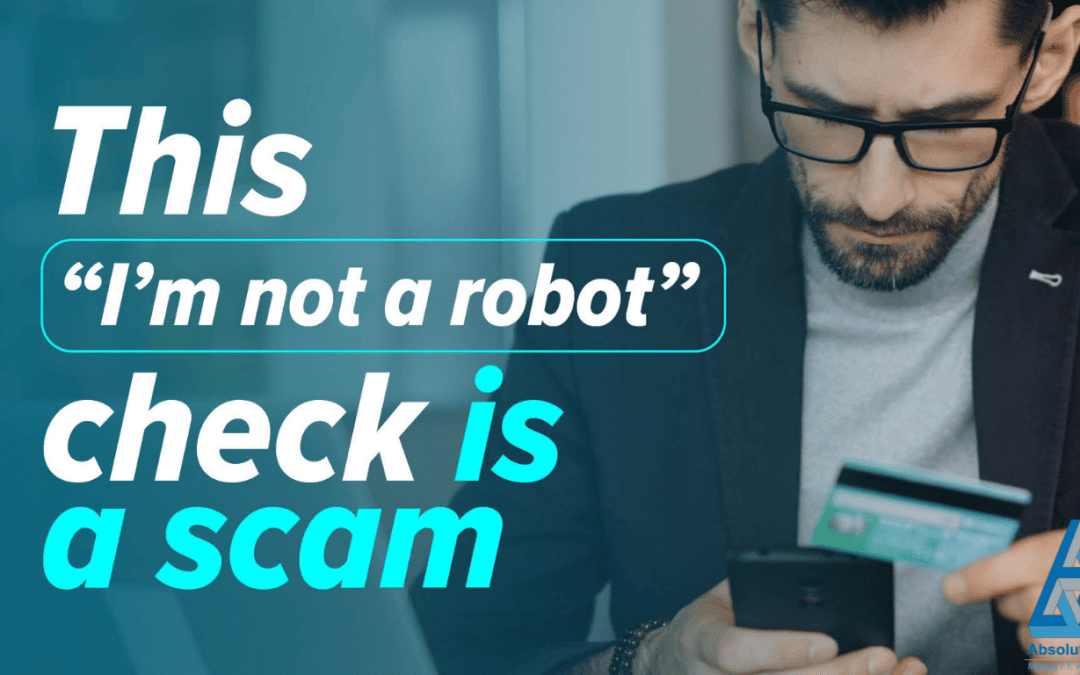
- A new scam uses fake CAPTCHA pages that ask you to “prove you’re human” by sending a pre-written text message rather than ticking a box.
- That single tap can fire off multiple texts to premium-rate international numbers, adding hidden charges to your bill.
- The scam works because charges are delayed by weeks, breaking the link between the action and the cost.
- Users often land on these pages via compromised websites or malicious ad networks, not just dodgy emails.
- The golden rule: a genuine CAPTCHA never asks you to send a text, if it does, close the page immediately.
- For regulated firms, the risk extends to governance, client confidence and incident response, not just money.
The everyday habit criminals are counting on
Few things online feel more routine than a CAPTCHA. You are asked to tick a box, pick out the traffic lights or squint at some warped text, and then you carry on with your day. For most professionals, it barely registers as a decision at all. That unthinking familiarity is precisely the weakness a new generation of scams is built to exploit. When something looks like part of a normal process, people move quickly and stop scrutinising, and criminals have learned to hide inside that moment of trust.
How the fake CAPTCHA scam actually works
The mechanics are deceptively simple. Instead of ticking a box or selecting images, a fraudulent page asks you to confirm you are human by sending a text message. It may feel slightly unusual, but the presentation is convincing enough to seem like a legitimate step. You tap a button, your phone opens a message that has already been written for you, and all that is left to do is press send. It feels like the path of least resistance, which is exactly the point.
Behind that single action, however, something less benign is happening. That one text can trigger multiple messages to premium-rate international numbers, in some cases dozens of them. Each adds a small charge, and because the fee does not appear the moment you press send, there is nothing to alert you that anything is wrong. You close the tab, feel you have completed a normal verification, and move on entirely unaware.
Why the delay makes it so dangerous
The genius of this scam, if we can call it that, is timing. The charges do not surface immediately. They arrive weeks later, buried in a phone bill that lands long after the “verification” has faded from memory. By then the connection between cause and effect has been broken. Few people will look at an unexpected charge and trace it back to a CAPTCHA they clicked a fortnight ago. This delayed billing is what makes the technique so effective and so hard to spot, and it is a reminder that the most damaging threats are rarely the loudest ones.
For regulated professional service firms, this pattern should feel familiar. So many modern risks are quiet and cumulative rather than sudden and obvious. The gap between something happening and someone noticing is where real damage takes root. It is a theme we explored in our look at whether firms can truly account for where their data lives and who can access it. Is your data security keeping pace with your business? is worth revisiting for exactly this reason.
It doesn’t always start with a suspicious email
One of the more uncomfortable truths about this scam is that it does not rely on you clicking a dubious link in an obvious phishing email. Many of these fake CAPTCHA pages appear through compromised legitimate websites or through advertising networks that have been abused. You click something that looks entirely credible, land on a page that feels familiar, and follow the instructions without a second thought.
In some cases the browser itself is manipulated to nudge you forward, making it harder to simply hit back or close the tab. This is not an attack that depends on technical naivety. It depends on habit, routine and the human tendency to trust the familiar. Your people are used to seeing CAPTCHAs; they expect them and they trust them, and that trust is being turned against them.
Why this matters more for regulated firms
For a solicitor’s practice, an accountancy firm, a mortgage broker or an IFA, the financial cost of a padded phone bill is almost beside the point. The deeper concern is what a moment of misplaced trust represents in an environment built on client confidentiality, regulatory scrutiny and demonstrable governance. If a member of staff can be persuaded to interact with a fraudulent page during the working day, the same reflex could just as easily be exploited by a more targeted attack designed to harvest credentials or gain a foothold in your systems.
Regulators and cyber insurers increasingly expect firms to show not just that they have technology in place, but that their people understand the threats they face and that there are clear processes for responding when something looks wrong. A single click may seem trivial, but in a compliance-focused business it can be the thread that, when pulled, exposes weaknesses in awareness, oversight and response. Sophisticated impersonation is now the norm rather than the exception, as we saw with fraudulent alerts crafted to look like genuine Microsoft communications. Our post Fake Microsoft Azure alerts: why regulated firms must not let their guard down makes clear how convincing modern scams have become.
The one rule your whole team should remember
Amid all the nuance, there is a single, reassuringly simple principle that cuts through it: a genuine CAPTCHA will never ask you to send a text message. That is not how the technology works. So if a verification page ever asks you to send a text, tap a pre-written message or dial a number to “prove you are human”, that is your signal to stop. Close the page. Do not interact with it any further, and do not try to complete the step to make it go away.
This one rule is easy to teach, easy to remember and remarkably powerful. It turns a subtle, hard-to-spot scam into something obvious, because it gives your team a clear, binary test to apply in the moment. The exact moment when habit would otherwise carry them forward.
Building awareness into the culture, not just the training day
Reminding your team about this scam is worthwhile, but the greater opportunity is to fold it into a broader culture of considered caution. The firms that weather these threats best are not those with the most expensive tools; they are those where people instinctively pause when something feels even slightly off, and where raising a concern is welcomed rather than treated as a nuisance.
That mindset increasingly needs to extend beyond email and web pages into the newer tools reshaping professional work. As automation and AI take on more decision-making inside firms, the same questions of oversight, accountability and “would we notice if something went wrong?” apply. Our article How AI agents cause governance blind spots explores how easily automated processes can drift beyond meaningful human control, a governance challenge that shares its DNA with the awareness gaps this CAPTCHA scam exploits.
A practical checklist for your firm
- Brief your team on the simple rule: no legitimate CAPTCHA asks you to send a text.
- Encourage a “pause and check” reflex whenever a familiar process behaves unexpectedly.
- Make reporting easy so staff feel comfortable flagging odd pages without fear of blame.
- Review mobile bills periodically for unexplained premium-rate or international charges.
- Confirm your incident response covers what to do if someone realises they have interacted with a fraudulent page.
- Treat awareness as ongoing, revisiting emerging scams rather than relying on a single annual training session.
The bottom line
The fake CAPTCHA scam is a neat illustration of how modern fraud works: it does not break your defences so much as borrow your habits. It hides in the routine, exploits trust, and relies on a delay so that by the time the cost appears, the cause has been forgotten. For regulated firms, the lesson runs deeper than a few pounds on a phone bill, it is about the discipline of noticing, questioning and responding.
A short moment of awareness genuinely can save a great deal of confusion, cost and reputational discomfort later. If you would like help making sure your team knows exactly what to watch for and building the wider governance and incident-response framework that regulated work demands, let’s talk.
What next?
One of my passions is helping businesses to succeed and if I can help you save some money as well – even better. You can fill out our contact form, phone us or click on the appointment button below and let’s start a conversation to see if I can help your business. Our guarantee:
- There are no hidden charges – this is a 100% free 15 minute consultation with no hidden charges.
- We will never spam you or sell on your contact details.
- We will treat your information with absolute confidentiality.
Other Posts for you to Enjoy